Why home blood pressure monitoring matters
High blood pressure often has no symptoms, yet it is one of the most important risk factors for heart attack, stroke, kidney disease, and heart failure. Many people get one or two elevated readings at a clinic and are told to come back later, but blood pressure can vary from day to day, and office measurements do not always reflect your usual levels.
Home blood pressure monitoring helps fill that gap. When done correctly, it can show your true average blood pressure, help confirm a diagnosis of hypertension, track whether treatment is working, and reveal patterns such as higher readings in the morning or after stress. It can also reduce the chance of being treated for a falsely high reading caused by anxiety in the clinic.
Who should consider checking at home
Home monitoring can be useful for many adults, especially if you:
- Have been told your blood pressure is borderline or high
- Are starting or adjusting blood pressure medication
- Already take treatment for hypertension
- Have diabetes, kidney disease, sleep apnea, or a strong family history of heart disease
- Want to understand how diet, exercise, alcohol, salt, or stress affect your readings
It is not a replacement for medical review, but it can make clinic visits more informative and decisions more accurate.
Choosing a reliable monitor
The best choice is an automatic upper-arm cuff monitor. These are generally more accurate than wrist or finger devices. Look for a device that has been clinically validated. If possible, choose a cuff that fits your upper arm properly, because a cuff that is too small or too large can give misleading results.
Before buying, check:
- Upper-arm cuff, not wrist, unless a clinician advises otherwise
- Validation by a recognized testing body
- Cuff size that matches your arm circumference
- Easy-to-read display and memory storage
If you are unsure, bring the device to your clinic and ask a healthcare professional to compare it with their reading.
How to measure correctly
The method matters as much as the device. To get a reliable reading:
- Avoid caffeine, smoking, and exercise for at least 30 minutes before measuring.
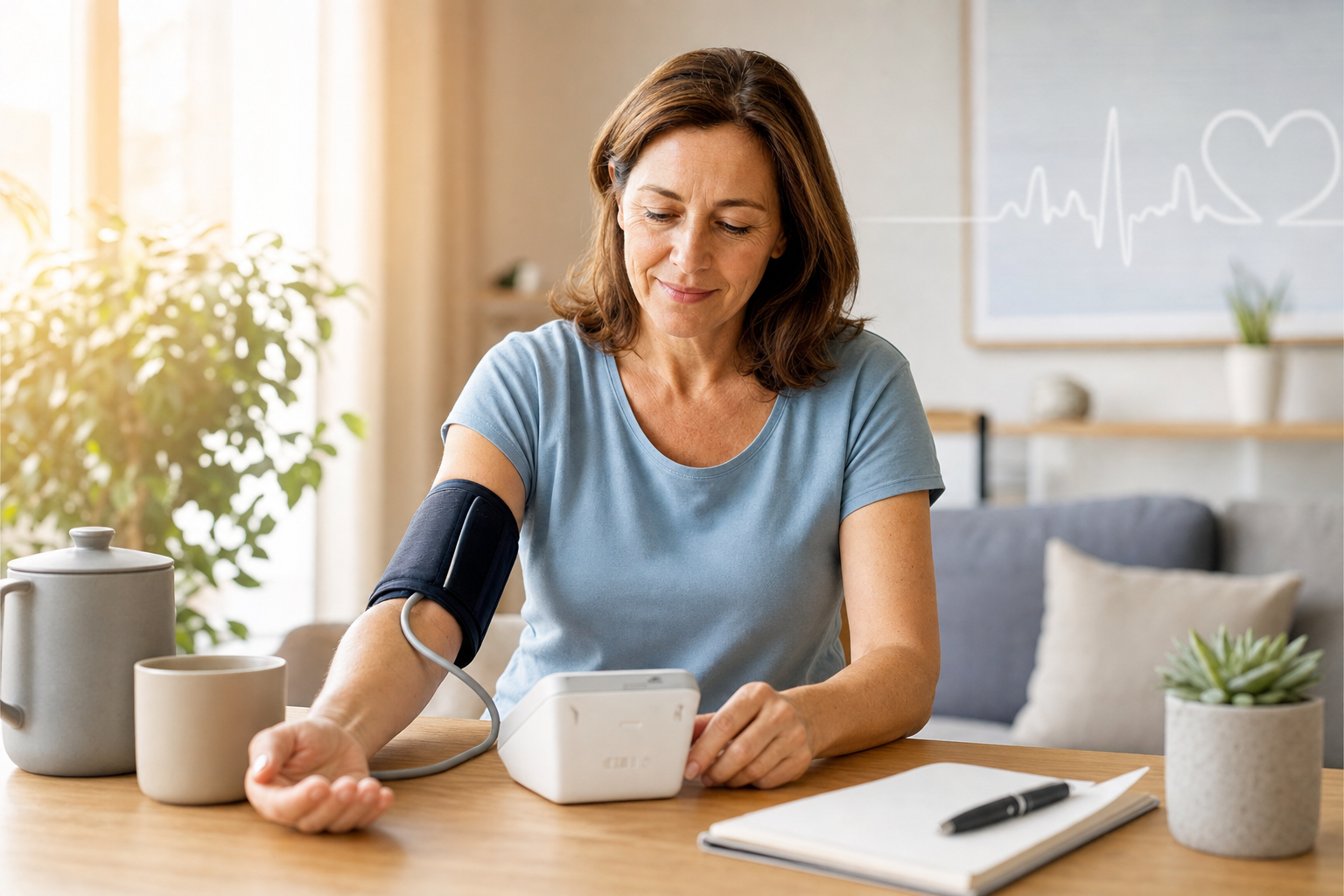
- Empty your bladder if needed, then sit quietly for 5 minutes.
- Sit with your back supported, feet flat on the floor, and legs uncrossed.
- Rest your arm on a table so the cuff is at heart level.
- Place the cuff on bare skin, not over clothing.
- Do not talk, check your phone, or move during the reading.
- Take two readings one minute apart and record both.
Try to measure at the same times each day, often morning and evening, unless your clinician gives other instructions.
How long should you monitor
For many people, a useful home monitoring plan is to check blood pressure for 7 days and calculate the average, excluding the first day if advised by your clinician. This gives a better picture than a single reading.
A common approach is:
- Morning readings before medication and breakfast
- Evening readings before dinner or bedtime
- Two readings each time, one minute apart
Your clinician may recommend a different schedule if you are changing medication or if there is concern about very high or low blood pressure.
How to interpret the numbers
Home readings are usually slightly lower than clinic readings. A home average of 135/85 mmHg or higher may suggest high blood pressure, but target levels can differ depending on your age, pregnancy status, kidney disease, diabetes, or other conditions.
What matters most is the average over several readings, not one isolated number. Temporary rises can happen after poor sleep, pain, emotional stress, alcohol, or a salty meal. That is why keeping a log helps your clinician spot the pattern.
Bring your recorded readings to appointments, or share them through a patient portal or message if your clinic uses one.
Common mistakes that affect accuracy
Small errors can change your result. The most common problems include:
- Using a cuff that does not fit
- Measuring immediately after walking, climbing stairs, or drinking coffee
- Talking during the reading
- Sitting with feet off the floor or legs crossed
- Holding your arm too low or too high
- Taking just one reading and stopping there
- Measuring when you are anxious, in pain, or rushed
If a reading seems unusual, repeat it after 5 minutes of quiet rest. If the numbers remain high, record them and contact your healthcare provider for advice.
When a home reading needs urgent attention
Most mildly elevated readings do not require emergency care, but very high blood pressure can be dangerous, especially if you have symptoms.
Seek urgent medical help if you have blood pressure readings around 180/120 mmHg or higher and also experience chest pain, severe headache, shortness of breath, confusion, weakness, vision changes, or trouble speaking.
If your reading is very high but you feel well, sit quietly, repeat the measurement after a few minutes, and contact your doctor or clinic promptly for guidance. Do not change or stop prescribed medication on your own.
Using your results to improve heart health
Home monitoring is most helpful when it leads to action. Your log can show whether your blood pressure improves after:
- Reducing salt and processed foods
- Being more physically active
- Losing excess weight, if needed
- Limiting alcohol
- Taking medication consistently
- Sleeping better and managing stress
If your readings are above target despite healthy habits, that is not a failure. Hypertension often needs both lifestyle changes and medication. The goal is to lower your long-term risk of heart attack, stroke, and kidney damage.
A practical conclusion
Home blood pressure monitoring is a simple habit with real value, but only if it is done carefully and interpreted in context. Use a validated upper-arm monitor, follow a consistent technique, and focus on your average readings over time. Share the numbers with your clinician, especially if they are repeatedly high or very low. Used well, home monitoring turns a single number into useful information and gives you a stronger role in protecting your heart.
A healthy heart is central to a longer, healthier life. Explore the wider Medtech health ecosystem.